Hard water stains are one of the most stubborn problems homeowners face during routine window washing, and they show up fast. The week, your windows look clear, and the next, they are covered in white, chalky spots that seem impossible to wipe off. If you live in Fort Worth, TX, this is a familiar frustration. The water here has a high mineral content, and those minerals leave their mark on every glass surface they touch.
These stains are not just an eyesore. Left untreated, mineral deposits can etch into the surface of the glass over time, making them harder and more expensive to remove. The good news is that most hard water stains can be treated at home, as long as you catch them early and use the right approach.
Understand What You Are Actually Dealing With
Before you reach for a cleaning product, it helps to know what hard water stains really are. Hard water contains high levels of dissolved minerals, mainly calcium and magnesium. When this water lands on your windows and evaporates, it leaves those minerals behind. Over time, they build up into a white or cloudy film on the glass.
The longer the stains sit, the more they bond to the surface. Fresh deposits are relatively easy to remove. Old, layered buildup is a different story. That is why quick action always gives you better results.
Understanding what causes the staining is also the first step toward preventing it from coming back. For homeowners who want to get ahead of the problem before it starts, our guide on How to Prevent Hard Water Stains on Windows Before They Set breaks down the most effective preventive habits you can build right now.
Gather the Right Tools Before You Start
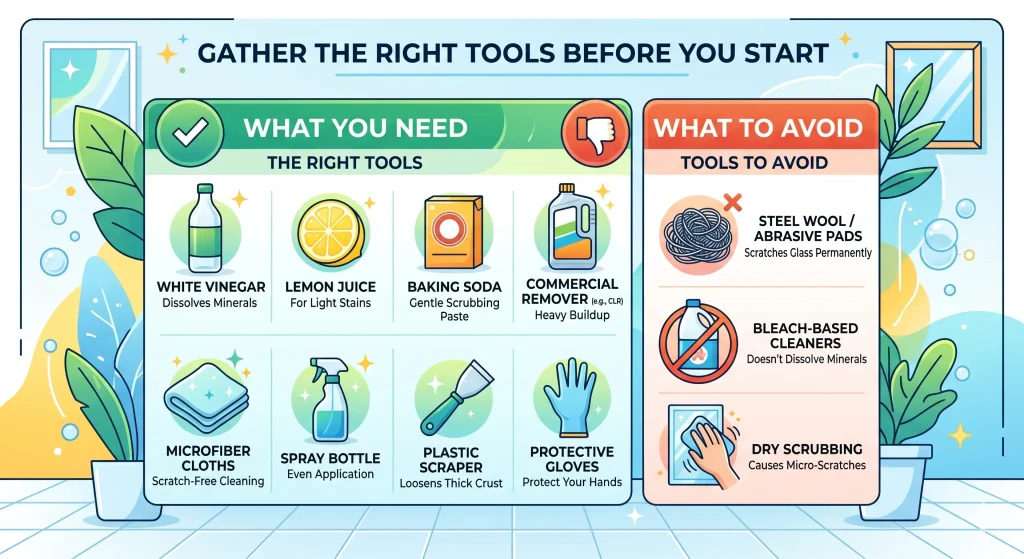
Using the wrong cleaner on glass can make things worse, not better. Some products scratch the surface or leave behind a residue that attracts more buildup. Here is what you actually need:
- White distilled vinegar: A natural acid that dissolves mineral deposits without damaging glass
- Lemon juice: Another mild acid option that works well on lighter stains
- Baking soda: Creates a gentle abrasive paste for scrubbing without scratching
- Commercial calcium and lime remover: Products like CLR or similar formulas are effective on heavier buildup
- Microfiber cloths: Soft enough to clean glass without leaving scratches
- Spray bottle: For applying your cleaning solution evenly
- Plastic or rubber scraper: Useful for loosening thick mineral crust without scratching the glass
- Protective gloves: Always protect your hands when working with acidic cleaners
What to avoid:
- Steel wool or abrasive scrubbing pads (they scratch glass permanently)
- Bleach-based cleaners (they do not dissolve minerals and can damage seals)
- Dry scrubbing on heavily stained glass (can cause micro-scratches)
Start with a Basic Vinegar Treatment
For light to moderate staining, white vinegar is your best first option. It is inexpensive, safe, and surprisingly effective on mineral deposits.
Here is how to do it:
- Fill a spray bottle with undiluted white vinegar
- Spray the stained area generously and let it sit for 5 to 10 minutes
- Do not let it dry on the glass
- Wipe it down with a clean microfiber cloth using circular motions
- Rinse the window with clean water and dry it immediately
- Repeat as needed for stubborn spots
Use a Baking Soda Paste for Tougher Stains
When vinegar alone does not cut through the buildup, a baking soda paste gives you a little more cleaning power. The mild abrasive action helps lift stubborn mineral crust without scratching the glass surface.
Steps to follow:
- Mix baking soda with just enough water to form a thick paste
- Apply the paste directly to the stained areas with a soft cloth or sponge
- Gently scrub in small circular motions
- Let it sit for 3 to 5 minutes before rinsing
- Rinse thoroughly with clean water and dry the window completely
Try a Commercial Lime and Calcium Remover for Heavy Buildup
Sometimes the buildup has been there long enough that household remedies are not enough. If you have been staring at the same cloudy patches for months, a commercial calcium and lime remover is the better choice.
These products are formulated specifically to dissolve mineral deposits on glass, tile, and fixtures. They work faster than vinegar and are designed for heavier buildup.
Tips for using commercial cleaners safely:
- Always read the label before applying to glass, since some formulas are not safe for tinted or treated windows
- Apply with a soft cloth or sponge, never an abrasive pad
- Follow the recommended wait time on the label; do not leave it on longer than instructed
- Rinse the glass thoroughly with clean water after treatment
- Dry the window immediately to prevent new water spots from forming
Know When DIY Is Not Enough
There is a limit to what home cleaning methods can do. If the mineral deposits have been sitting on the glass for a long time, they may have started to etch into the surface. Etched glass looks hazy or frosted, and no amount of scrubbing will fix that at home.
Here are signs the damage may go deeper than surface staining:
- The glass still looks hazy after multiple cleaning attempts
- You can feel a rough or pitted texture on the glass surface
- The staining appears to be inside the glass layers, not just on the surface
- There are visible scratch marks or scuff patterns around the stained areas
In these cases, professional polishing or glass restoration may be required. A trained technician can use specialized tools and compounds to resurface the glass without replacing it entirely, which is far more cost-effective in most situations.
Angi advises homeowners to look specifically for professionals with glass restoration experience rather than general window cleaners when etching or deep mineral damage is suspected.
To understand exactly when it makes sense to stop doing it yourself and bring in a professional, take a look at our full breakdown in When to Call a Pro for Hard Water Stains on Windows. It covers what technicians look for, what the process involves, and how to choose the right service.
Rinse and Dry the Right Way
How you finish the job matters just as much as how you clean. Leaving water on the glass after treatment is one of the most common mistakes homeowners make. Even clean tap water contains minerals, and if it evaporates on the glass, you are right back where you started.
Best practices for rinsing and drying:
- Rinse the window with distilled or filtered water if possible
- If using tap water, dry the glass immediately with a clean microfiber cloth
- Use a squeegee for large windows to remove water quickly and evenly
- Work from top to bottom so water does not drip back onto cleaned areas
- Check edges and corners where water tends to collect and dry slowly
This step is especially important in Fort Worth during summer, when heat causes water to evaporate faster and leaves more concentrated mineral residue behind.
Inspect the Area Around Your Windows Too
Hard water stains rarely appear on glass alone. The frames, sills, and surrounding surfaces often show the same mineral buildup, and they can recontaminate clean glass if left untreated.
What to check around your windows:
- Window frames and sills for white mineral crust or chalky residue
- Sprinkler heads or irrigation lines that spray near the windows
- Air conditioning condensation lines that drip onto nearby glass
- Exterior walls or ledges that channel water toward the windows during rain
Understanding the full picture of what causes hard water staining is covered in detail in What Are Hard Water Stains? Signs, Causes, and What They Do to Glass. That resource explains the science behind mineral deposits and what they do to different surfaces, including glass, frames, and window hardware.
Protect Your Windows After Cleaning
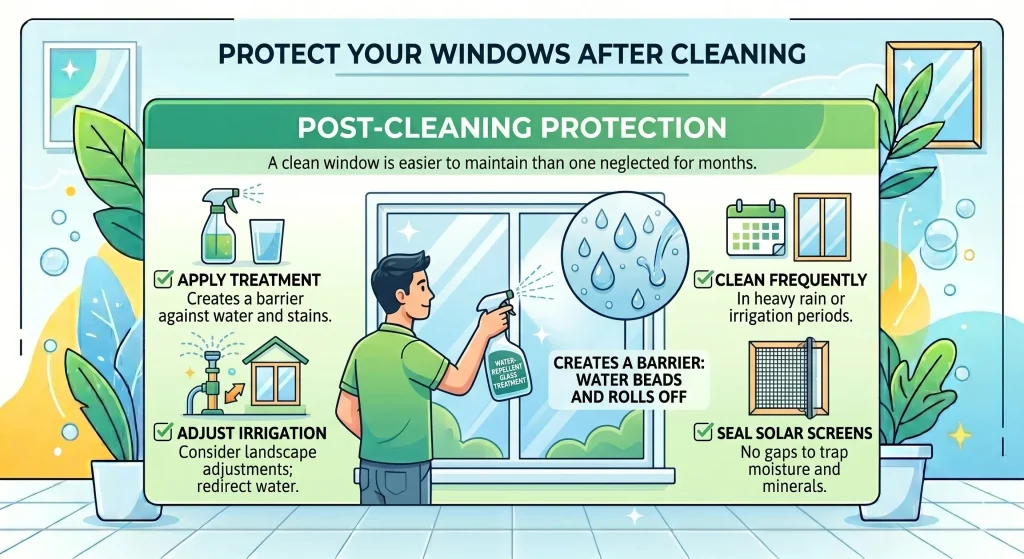
Once your windows are clean, taking a few extra steps can slow down how quickly the stains come back. A clean window is much easier to maintain than one that has been neglected for months.
Protective steps worth taking:
- Apply a water-repellent glass treatment after cleaning. These products create a barrier that causes water to bead and roll off instead of sitting on the surface.
- Clean your windows more frequently during periods of heavy irrigation or rain
- Consider adjusting landscaping or irrigation systems that direct water toward your windows
- If you have solar screens on your windows, make sure they are properly installed and sealed. Gaps can trap moisture and minerals against the glass.
The U.S. Department of Energy notes that properly installed exterior window treatments and screens do more than manage heat; they also reduce the direct water and mineral exposure that leads to recurring glass staining.
Take Back Your View Before the Stains Get Worse
Hard water stains are a manageable problem when you stay ahead of them. The longer you wait, the deeper they set, and the harder they are to remove without professional help. Starting with a simple vinegar treatment, moving up to baking soda paste or commercial cleaners for tougher buildup, and finishing with proper drying and protection gives you the best chance of restoring your windows without spending a lot of money.
Fort Worth homeowners deal with hard water year-round, so building a regular window cleaning routine is one of the smartest things you can do to protect your home’s appearance and the longevity of your glass.
If you have already tried these methods and your windows still look cloudy, or if you are not sure whether the damage is surface-level or deeper, it is always better to get a professional opinion before the problem gets worse.
At Atlas Solar-Tex, we understand how Fort Worth’s climate and water quality affect your windows and window treatments. Whether you need guidance on protecting your glass with the right solar screen setup or you have questions about window care in this area, we are here to help. Contact us or give us a call, and let us help you find the right solution for your home.
Frequently Asked Questions
How long does it take for hard water stains to permanently damage glass?
It depends on the mineral concentration and how often the glass gets wet. In high-mineral areas like Fort Worth, stains can begin bonding to the glass within a few weeks if not cleaned regularly.
Is vinegar safe to use on all window types?
Vinegar is generally safe on standard glass, but avoid using it on windows with anti-reflective coatings, certain specialty films, or stone window sills, as the acidity can cause damage over time.
What is the difference between hard water stains and window oxidation?
Hard water stains are mineral deposits on the glass surface. Oxidation affects the window frame, usually aluminum or metal, and appears as a chalky or pitted surface on the frame itself, not the glass.
Can solar screens help reduce hard water staining on windows?
Yes. A properly installed solar screen creates a physical barrier between the glass and water sources like sprinklers, which reduces direct mineral contact and helps keep the glass cleaner for longer.
How often should Fort Worth homeowners clean their windows to prevent stain buildup?
A cleaning every 4 to 6 weeks is a practical routine for most homes in this area, especially during summer when irrigation systems run frequently and water evaporates faster.
Does water softener installation in a home reduce window staining?
It can help significantly. Softened water contains fewer dissolved minerals, which means less residue left behind when water evaporates on your windows and exterior surfaces.
Is it safe to use a pressure washer to remove hard water stains from windows?
It is not recommended. High-pressure water can crack seals, damage window frames, and push water into areas where it causes long-term moisture damage. Use a spray bottle and soft cloth instead.
Can hard water stains affect window tinting or films?
Yes. Mineral deposits can bond to tinted films and make them harder to clean without causing peeling or bubbling. Always use cleaners that are rated safe for window films when working on tinted glass.
What is the best time of day to clean windows in Fort Worth?
Early morning or late afternoon is ideal. Cleaning in direct midday sun causes solutions to dry too fast before you can wipe them off, which can leave streaks and residue behind.