Most homeowners only think about hard water stains after they are already there during window washing, white, cloudy, and stubbornly bonded to the glass. By that point, you are spending time and money trying to undo damage that could have been avoided in the first place.
Prevention is not complicated, but it does require a consistent routine and a clear understanding of where the problem starts. In Fort Worth, TX, the water supply runs high in dissolved minerals like calcium and magnesium. Every time water touches your windows and evaporates, it leaves a little more buildup behind. Over weeks and months, those thin layers stack up into the stubborn stains that are so difficult to remove.
Know Where Your Water Is Coming From
The first step in prevention is identifying every water source that regularly contacts your windows. You cannot stop what you have not tracked down.
Common sources of hard water contact on windows:
- Sprinkler or irrigation systems that spray toward the house
- Garden hoses used near windows or on patios with glass doors
- Air conditioning units that drip condensation onto nearby glass
- Roof runoff that channels mineral-laden water down exterior walls
- Rain combined with dirty or mineral-coated surfaces near the glass
For a broader look at what hard water actually does to glass over time and why early action matters, our resource on What Are Hard Water Stains? Signs, Causes, and What They Do to Glass covers the science behind mineral damage in detail.
Adjust Your Sprinkler System
Once you know which sprinkler heads are reaching your windows, adjusting them is one of the most impactful changes you can make. This single step can dramatically reduce how often mineral deposits form on your glass.
What to check and adjust:
- Redirect spray heads so they point away from the house and window surfaces
- Replace wide-spray heads with targeted drip irrigation near beds close to the home
- Install sprinkler deflector shields on heads that are difficult to redirect
- Check the system seasonally since heads shift and settle over time
- Run the system manually while watching from outside to confirm no overspray is hitting the glass
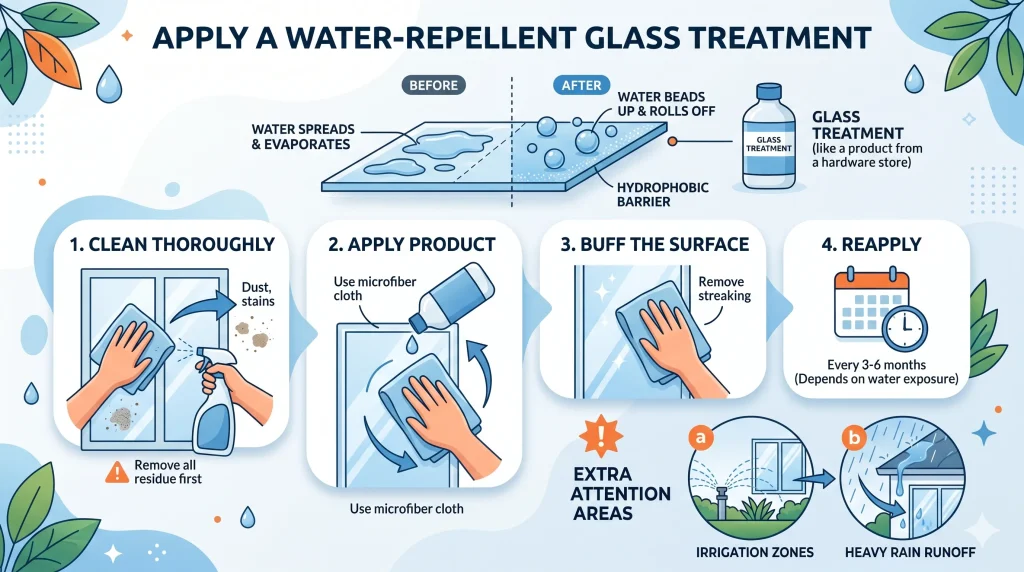
Apply a Water-Repellent Glass Treatment
One of the most underused prevention tools is a water-repellent coating applied directly to the glass. These products are widely available at hardware stores and create a hydrophobic barrier on the surface that causes water to bead up and roll off instead of spreading and evaporating in place.
How it works and how to apply it:
- Clean the glass thoroughly before applying any coating. Residue or existing deposits will get sealed in if the surface is not cleaned first.
- Apply the water-repellent product with a clean microfiber cloth using the method listed on the label
- Buff the surface after application to remove any streaking
- Reapply every 3 to 6 months, depending on how much water exposure the windows receive
- Focus extra attention on windows facing irrigation zones or areas with heavy rain runoff
Build a Regular Wiping Routine After Rain or Irrigation
Water-repellent coatings help, but the most reliable form of prevention is also the simplest. Wiping down your windows after rain or irrigation, before the water has a chance to dry and leave minerals behind, stops deposits from forming in the first place.
A simple routine that works:
- Keep a clean microfiber cloth or squeegee near patio doors and frequently exposed windows
- After rain or sprinkler activity, wipe down the glass within 30 to 60 minutes
- Use a dry cloth first to remove as much water as possible, then follow with a light spray of diluted white vinegar to neutralize any mineral content
- Dry the glass completely before walking away
- Pay attention to the bottom corners and edges where water tends to pool
The Spruce recommends wiping glass surfaces promptly after water exposure as one of the most effective and lowest-cost habits for preventing hard water buildup from bonding to glass.
Install or Upgrade Your Window Treatments
Window treatments do more than block heat and light. A properly fitted solar screen or exterior shade creates a physical layer between your glass and the environment, reducing how much water, dust, and mineral spray ever reaches the surface directly.
How window treatments help with prevention:
- Solar screens installed on the exterior of windows intercept water from sprinklers and rain before it reaches the glass
- Roller shades and exterior blinds reduce the total surface area of glass exposed to the elements
- Properly sealed and fitted screens eliminate gaps where moisture and minerals can collect against the glass edge
- Screens also reduce the intensity of direct sunlight hitting the glass, which slows the evaporation rate and gives you more time to wipe water away before it dries
The U.S. Department of Energy notes that exterior window treatments and solar screens do more than manage heat and light, they also reduce the direct environmental exposure that accelerates surface wear on glass.
Use Distilled or Filtered Water for Window Cleaning
Many homeowners are unaware that the water they use to clean their windows can be part of the problem. Tap water in Fort Worth contains dissolved minerals, and if you rinse your windows with it and let it air dry, you are essentially adding a fresh layer of deposits while trying to clean.
Smarter cleaning water choices:
- Use distilled water for rinsing windows whenever possible. It contains no dissolved minerals and leaves no residue.
- If distilled water is not practical, always dry the window completely with a clean microfiber cloth immediately after rinsing with tap water
- A squeegee is faster than a cloth for large windows and removes water before it has time to evaporate
- Avoid letting any water sit on the glass surface, even for a few minutes on a hot day
Seal and Maintain Window Frames and Sills
Mineral deposits do not just form on glass. The frames and sills around your windows collect buildup too, and if left untreated, that buildup can leach back onto the glass surface every time it gets wet.
Frame and sill maintenance tips:
- Inspect window frames seasonally for white chalky residue or mineral crust along the edges
- Clean frames with a diluted vinegar solution at the same time you clean the glass
- Check caulking and weatherstripping for cracks or gaps where water can pool and sit
- Reseal any gaps with exterior-grade caulk to prevent water from collecting in hard-to-reach areas
- For metal frames, apply a protective sealant that slows down oxidation and mineral bonding
Schedule a Professional Window Inspection Once a Year
Even with a solid prevention routine, it helps to have a professional set of eyes on your windows at least once a year. A trained technician can spot early signs of mineral etching, failing seals, or installation issues that make windows more vulnerable to staining and damage.
What a professional inspection covers:
- Checking for early-stage mineral etching that is not yet visible to the untrained eye
- Identifying installation gaps or frame issues that trap moisture against the glass
- Assessing whether window treatments or screens are properly fitted and performing correctly
- Recommending targeted solutions based on the specific water exposure each window faces
For situations where staining has progressed beyond what prevention can address, our guide on How to Remove Hard Water Stains from Windows walks through the full range of cleaning and treatment options available.

Monitor High-Risk Windows Through the Season
Not all windows on your home face the same level of water exposure. Some face the irrigation zones, some sit beneath roof edges with heavy runoff, and others are shaded and rarely exposed to direct water contact. Knowing which windows are highest risk lets you focus your prevention efforts where they matter most.
How to track and manage high-risk windows:
- Label or note which windows face sprinkler zones, heavy rain exposure, or AC drip lines
- Check those windows more frequently, especially after rain events or during peak irrigation season
- Apply water-repellent coatings to high-risk windows more often than lower-exposure areas
- Consider installing exterior solar screens specifically on the windows that face the most water exposure
Stop the Stains Before They Ever Start
Prevention is always easier than removal. Once hard water minerals have bonded to glass and begun to etch the surface, your options narrow and the cost and effort required go up significantly. Building even a few of these habits into your regular home maintenance routine can save you hours of scrubbing and hundreds of dollars in professional cleaning or glass restoration down the line.
Fort Worth homeowners deal with hard water conditions year-round, and the combination of high mineral content and intense summer heat makes windows especially vulnerable. The good news is that with consistent attention and the right protective measures, keeping your glass clear is very manageable.
At Atlas Solar-Tex, we help homeowners in Fort Worth protect their windows with properly fitted solar screens and window treatments that do more than just manage heat and light. If you want to know which options make the most sense for your home’s specific water exposure situation, contact us or give us a call. We are happy to walk you through what works best for your windows.
Frequently Asked Questions
Can hard water prevention methods work on older windows with existing light staining?
Yes, but you should clean the glass thoroughly first before applying any protective coating. Applying a repellent over existing deposits will seal them in rather than protect against new ones.
Does the type of sprinkler head affect how much mineral deposit ends up on windows?
Yes. Misting or fine-spray heads create smaller droplets that travel farther and evaporate faster, leaving more concentrated mineral residue. Larger droplet heads with directed flow cause less glass exposure overall.
Are there window frame materials that resist mineral buildup better than others?
Vinyl frames tend to resist mineral bonding better than aluminum frames. Aluminum is more porous and can hold onto mineral deposits, which then transfer back to the glass during rain or cleaning.
How does Fort Worth's water hardness compare to other Texas cities?
Fort Worth water is considered moderately to highly hard, with mineral levels that are among the higher ranges in North Texas. This makes consistent window maintenance more important here than in areas with softer water supplies.
Can I apply a water-repellent treatment to windows that already have solar screens installed?
You should apply the treatment directly to the glass before installing exterior screens. If screens are already in place, remove them temporarily, treat the glass, let it cure fully, then reinstall the screens.
Does window tinting affect how mineral deposits form on glass?
Window film does not prevent mineral deposits from forming on the outer surface, but it does reduce heat transfer through the glass, which slightly slows the evaporation rate and gives you a bit more time before deposits dry and bond.
How do I know if my AC condensation line is contributing to window staining?
Check the wall or surface directly below the AC unit for white streaks or chalky residue. If you see that pattern running toward a nearby window, the condensation line is likely a contributing source.
Is it worth investing in a whole-home water softener to protect windows?
It depends on the scale of the problem. A whole-home softener reduces mineral content in all water used on the property, which helps windows and other surfaces, but the upfront cost is significant. Targeted prevention steps are often more practical for most homeowners.
What is the longest a water-repellent glass coating typically lasts before reapplication?
Most residential-grade products last between 3 and 6 months with normal weather exposure. Higher-end coatings designed for exterior glass can last up to 12 months, though results vary based on sun exposure and how often the glass gets wet.