If you have noticed white, hazy, or chalky patches on your windows that do not wipe away during window washing, you are most likely looking at hard water stains. They are one of the most common and misunderstood problems that homeowners deal with, and in Fort Worth, TX, they are practically unavoidable without the right maintenance habits in place.
Understanding what hard water stains actually are, where they come from, and what they do to your glass over time is the foundation of dealing with them effectively. Many homeowners spend time and money on the wrong cleaning products or techniques because they do not fully understand what they are up against.
What Hard Water Actually Is
Before getting into the stains themselves, it helps to understand the water that causes them. Not all water is the same. Water that travels through rock and soil picks up dissolved minerals along the way, primarily calcium and magnesium. The more minerals the water contains, the harder it is to classify.
Hard water is not harmful to drink, and it is not a sign of contamination. It is simply water with a higher-than-average mineral content. But those minerals become a problem when the water evaporates on surfaces like glass, tile, metal, and stone.
For a full breakdown of the restoration process, the signs that indicate professional help is the right next step, and how to choose the right service, our detailed guide on When to Call a Pro for Hard Water Stains on Windows covers everything you need to know before making that decision.
How Hard Water Stains Form on Glass
The process is straightforward, but it happens faster than most homeowners expect. When hard water lands on a glass surface, the water itself eventually evaporates. The minerals dissolved in that water do not evaporate. They stay behind, bonded to the glass surface in thin, chalky layers.
The formation process, step by step:
- Water contacts the glass surface through rain, irrigation, condensation, or cleaning
- The water begins to evaporate, especially quickly in warm or sunny conditions
- Calcium, magnesium, and other dissolved minerals are left behind on the surface
- Each new water event adds another thin layer of mineral residue
- Over time, those layers stack up and bond more tightly to the glass
The Most Common Signs of Hard Water Stains on Windows
Hard water stains are not always obvious at first, especially in their early stages. Knowing what to look for helps you catch them before they become a more serious problem.
Early-stage signs:
- A light haze or film on the glass that appears after rain or sprinkler activity
- Faint white or gray spots in areas where water regularly contacts the glass
- A slightly dull appearance to the glass that used to look clear and bright
- Spots that seem to disappear when the glass is wet but reappear when it dries
Mid-stage signs:
- Clearly visible white or chalky patches that do not wipe away with a damp cloth
- Streaking or cloudy areas concentrated around the lower portion of the window, where water pools
- Residue along window edges, frames, and sills that matches the deposits on the glass
- A rough or gritty feeling on the glass surface when you run your finger across it
Advanced-stage signs:
- A permanent hazy or frosted appearance that persists even after cleaning attempts
- Visible etching or pitting in the glass surface that you can feel as well as see
- Discoloration that appears to be embedded in the glass rather than sitting on top of it
- Cleaning attempts that make little to no visible difference
If you are already seeing these signs, especially in the mid to advanced stages, it is a strong indicator that you should explore How to Remove Hard Water Stains from Windows before the damage becomes permanent.
What Causes Hard Water Stains on Residential Windows
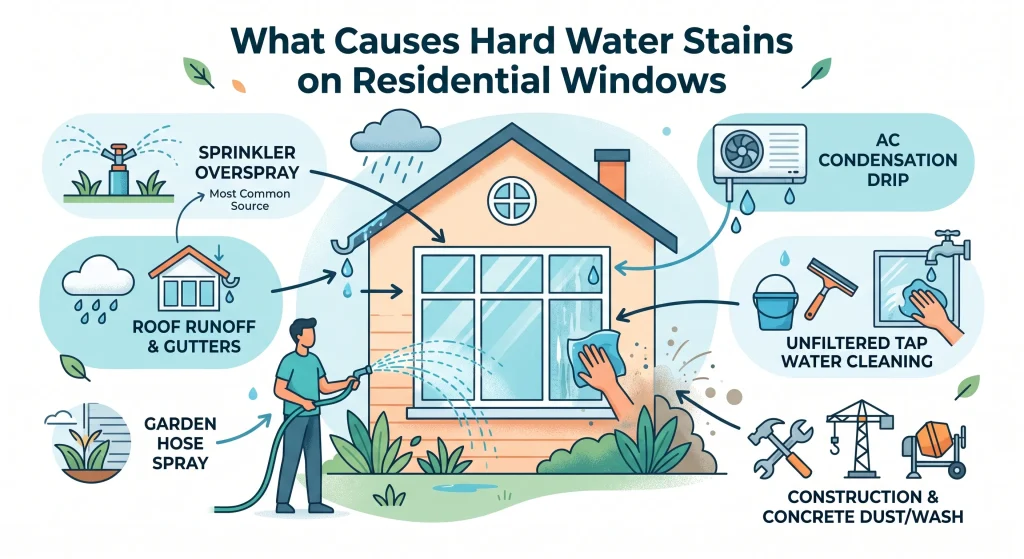
Hard water stains do not appear randomly. They follow the water. Identifying the specific sources affecting your windows is essential for addressing the problem at its root.
The most common causes in Fort Worth homes:
- Irrigation and sprinkler systems: The leading cause for most homeowners. Sprinkler heads that overspray toward the home deposit mineral-rich water directly onto the glass on a regular schedule.
- Rainwater runoff: Rain picks up mineral deposits from roof materials, gutters, and exterior walls as it flows down, delivering concentrated mineral water directly onto window surfaces.
- Garden hose use: Rinsing patios, siding, or landscaping near windows often results in overspray that contacts the glass.
- Air conditioning condensation: AC units drip condensation continuously during warm months. If that drip line sits near or above a window, it is a steady source of mineral-heavy water.
- Hard tap water used for cleaning: Homeowners who wash their windows with unfiltered tap water and let it air dry are inadvertently adding fresh mineral deposits while trying to clean.
- Nearby construction or concrete work: Concrete and masonry contain alkaline minerals that can splash or wash onto windows during construction or heavy rain events.
For a detailed look at how to address these sources and build habits that keep deposits from forming, our guide on How to Prevent Hard Water Stains on Windows Before They Set covers the most effective preventive steps available to Fort Worth homeowners.
The Difference Between Surface Deposits and Glass Etching
This is one of the most important distinctions a homeowner can understand, and it is the one that most people miss until the damage has already gone too far.
Surface deposits are mineral layers sitting on top of the glass. They have not yet penetrated or altered the glass itself. At this stage, the right cleaning products and techniques can remove them fully and restore the glass to its original clarity.
Glass etching happens when mineral deposits have been on the surface long enough, or in high enough concentrations, that they begin to chemically react with the glass. Silica, which is a primary component of glass, can bond with calcium and other minerals at a molecular level. When this happens, the glass surface itself is altered. The damage is no longer just on the glass. It is in the glass.
How to tell the difference:
- Run a clean fingernail lightly across the stained area. Surface deposits feel gritty or rough but sit on top. Etching feels like the glass texture itself has changed.
- Spray a small amount of water on the area and wipe it dry. Surface stains will look cleaner when wet. Etched glass will still look hazy whether wet or dry.
- If multiple cleaning attempts with appropriate products have made no visible improvement, etching is likely the issue rather than surface buildup.
Family Handyman’s stain removal guide explains why identifying the type and depth of a stain before treating it is the most important step in getting results without causing additional surface damage.
How Hard Water Stains Affect Different Types of Glass
Not all glass reacts to hard water deposits in the same way. The type of glass in your windows affects how quickly staining occurs, how easily it can be removed, and how vulnerable the surface is to etching.
- Standard clear glass: The most common window glass. Moderately susceptible to surface deposits and etching over time. Usually responds well to early-stage treatment with acidic cleaners.
- Tinted or heat-absorbing glass: Contains additives that absorb solar energy. Hard water deposits on tinted glass can be harder to remove because the tinting can react with some cleaning products. Care is needed when selecting treatments.
- Low-E coated glass: Has a thin metallic coating designed to reflect infrared light and improve energy efficiency. This coating is sensitive to acidic cleaners and abrasive treatment. Hard water stains on low-E glass require gentler cleaning methods to avoid damaging the coating.
- Tempered safety glass: More resistant to physical impact than standard glass, but not more resistant to chemical mineral bonding. Etching can still occur on tempered glass and is equally difficult to reverse.
- Laminated glass: Contains a plastic interlayer between glass panes. The outer glass surface behaves similarly to standard glass in terms of hard water staining, but the edges and seals need special attention to prevent moisture intrusion.

What Hard Water Stains Do to Window Frames and Hardware
The damage from hard water is not limited to the glass surface. The frames, sills, tracks, and hardware around your windows are equally vulnerable, and damage to those components can compound the problem over time.
Effects on window frames:
- Aluminum frames develop white oxidation and pitting from prolonged mineral exposure
- Vinyl frames stain less severely but can still develop a dull, chalky coating that is difficult to remove
- Wooden frames absorb moisture along with dissolved minerals, which accelerates rot and swelling
Effects on window tracks and hardware:
- Mineral deposits build up in window tracks, making them harder to open and close smoothly
- Metal hardware including hinges, locks, and fasteners can corrode when repeatedly exposed to hard, mineral-rich water
- Rubber weatherstripping and seals degrade faster when exposed to high-mineral-content water over time
Why Fort Worth Windows Are Especially Vulnerable
The combination of factors in Fort Worth creates a particularly challenging environment for window glass. Understanding why this area is a higher-risk zone helps homeowners appreciate why consistent maintenance matters more here than in many other parts of the country.
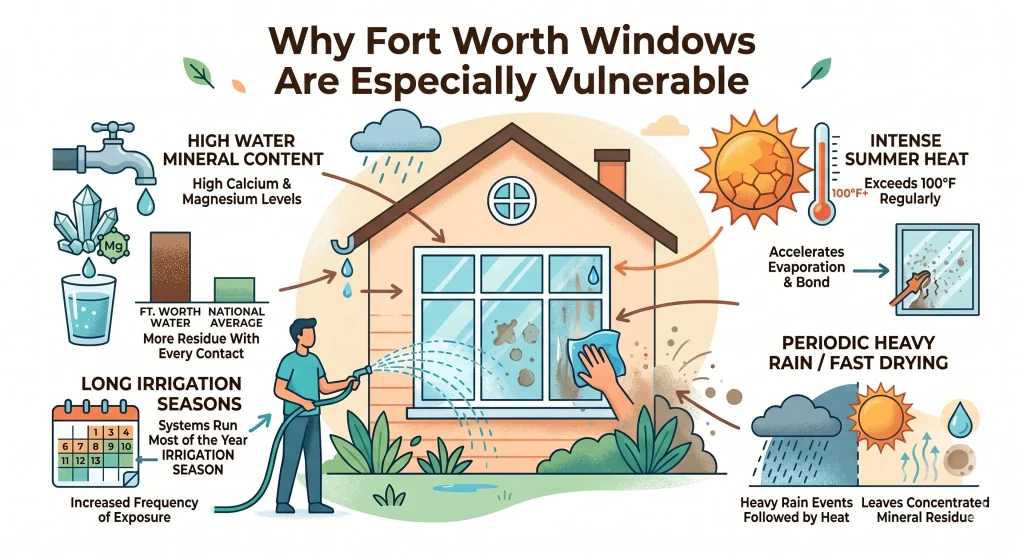
The Fort Worth factors:
- High water mineral content: The local water supply carries elevated levels of calcium and magnesium relative to national averages, meaning every water contact event leaves more mineral residue behind.
- Intense summer heat: Temperatures regularly exceed 100 degrees Fahrenheit during peak summer, which accelerates evaporation and causes mineral deposits to bond to glass more quickly and more tightly.
- Long irrigation seasons: The warm climate means irrigation systems run for a larger portion of the year compared to cooler regions, increasing how frequently windows are exposed to sprinkler overspray.
- Periodic heavy rain followed by fast drying: Rain events deposit minerals from the atmosphere and surrounding surfaces, and the heat that follows dries everything quickly, leaving concentrated mineral residue before homeowners have a chance to wipe it away.
The National Weather Service documents the frequency and severity of extreme heat events across North Texas, conditions that directly accelerate how quickly mineral deposits evaporate, concentrate, and bond to exterior glass surfaces.
When Hard Water Stains Cross the Line Into Professional Territory
There is a point at which home cleaning approaches are no longer sufficient. Recognizing that threshold early prevents homeowners from wasting time on DIY attempts that will not work while the damage continues to worsen.
Signs it is time to call a professional:
- The glass remains hazy or discolored after multiple cleaning attempts with appropriate products
- You can feel texture changes or pitting on the glass surface
- The staining covers large areas of multiple windows throughout the home
- The glass has visible scratches or clouding that appears to be inside the glass rather than on the surface
- Standard cleaning products seem to have no effect or make the appearance temporarily worse
Understanding the Problem Is the First Step Toward Solving It
Hard water stains are not just a cosmetic nuisance. They are a sign of an ongoing mineral accumulation process that, if left unaddressed, can permanently alter the clarity and integrity of your glass. The earlier you recognize what you are dealing with, the more options you have and the less it will cost to fix.
Fort Worth homeowners face some of the most challenging hard water conditions in the state, but that does not mean damaged windows are inevitable. With the right knowledge and a consistent approach to window care, you can protect your glass, extend the life of your windows, and keep your home looking its best year-round.
At Atlas Solar-Tex, we work with Fort Worth homeowners every day to protect their windows from heat, glare, and the kind of environmental wear that leads to costly repairs. If you want expert guidance on the best window treatment solutions for your home’s specific needs, contact us or give us a call. We are here to help you make the right choice for your windows.
Frequently Asked Questions
Can hard water stains form on the inside surface of windows?
Yes, but you should clean the glass thoroughly first before applying any protective coating. Applying a repellent over existing deposits will seal them in rather than protect against new ones.
Do hard water stains affect how much light comes through a window?
In the early stages, the effect is minimal. As deposits build up and etching develops, they can noticeably reduce light transmission and clarity, making rooms feel darker and windows appear permanently dirty.
Is there a way to test how hard the water is in my area before it becomes a window problem?
Yes. Inexpensive water hardness test strips are available at hardware and home improvement stores. You can also contact the Fort Worth Water Department directly for published water quality reports.
Can hard water stains on windows affect the energy efficiency of the glass?
Heavy mineral buildup can interfere with low-E coatings and reduce their effectiveness, which can affect how well the glass reflects heat. This is one more reason to address deposits before they become severe.
Do hard water stains smell or leave any residue beyond the visual discoloration?
Hard water stains are odorless and leave only a dry mineral residue. If you notice any odor or sliminess around window staining, that may indicate a separate issue such as mold or algae growth in a damp area nearby.
How do I know if what I am seeing is hard water staining versus paint overspray or adhesive residue?
Hard water stains are typically white to gray in color, follow the pattern of water flow, and respond at least partially to acidic cleaners like vinegar. Paint or adhesive residue is usually irregular in shape, may have color, and does not respond to acid-based cleaning.
Can animals or birds contribute to hard water-like staining on windows?
Bird droppings can leave calcium-rich deposits that behave similarly to hard water stains and can etch glass if left too long. They are separate issues but require similar prompt attention to avoid permanent damage.
Is hard water damage covered by home insurance or window warranties?
Most homeowner insurance policies do not cover gradual hard water damage, as it is considered a maintenance issue rather than a sudden loss. Some window manufacturer warranties exclude damage caused by mineral deposits, so reviewing your documentation is worthwhile.
Can hard water stains on windows make them more likely to crack or break?
Stains and surface etching weaken the structural integrity of glass slightly over time, particularly at the microscopic level. While a stained window will not shatter on its own, compromised glass surfaces are more vulnerable to stress fractures from temperature changes or impact.